
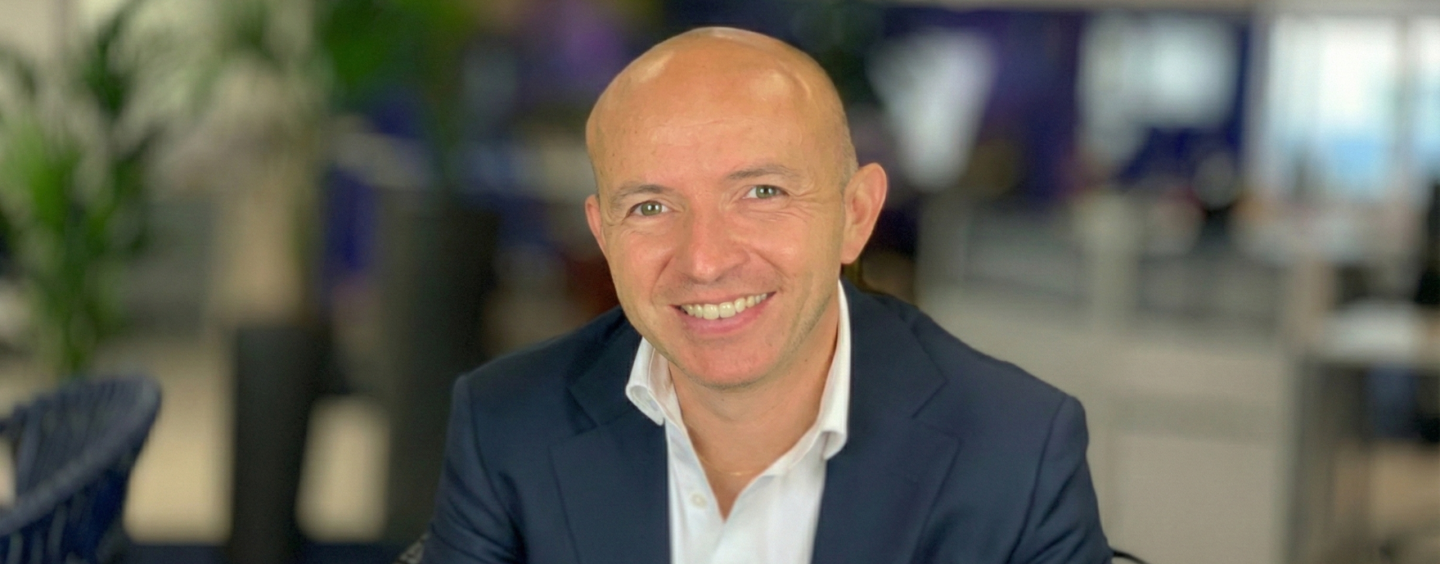
Jérôme Beguin: France and Azerbaijan are both sovereign nations, each with its own perspective on regional balances.
An interview for Azerbaijan Today magazine with Mr Jérôme Beguin, the Business Development Director – HR Strategy Consulting President of the Friends of Azerbaijan Association.
Questions prepared by Rovshan Pashazadeh
AT: Mr. Jérôme Béguin, please allow me to extend my sincere congratulations on your election as President of the Association of Friends of Azerbaijan and to wish you every success in this important and demanding mission. Compared to the previous leadership, what will be the strategic priorities of your action at the head of the Association?
J.B: First and foremost, I would like to warmly thank Jérôme Lambert, our former president, whose responsibilities I now have the honor of assuming.
In many ways, he was the president of resilience. Through his steadfast commitment and his sincere friendship toward Azerbaijan, he managed to stay the course, counter criticism, and demonstrate to the Azerbaijani people that only a minority albeit an influential one sought to undermine the relationship between our two countries.
Today, I take on the responsibility of leading and energizing the future actions of our Association with pride, determination, and a strong sense of duty, alongside a committed team.
Our ambition is clear: to rebuild a strong, visible, and active association capable of restoring and maintaining a solid, lasting, and respectful bond between France and Azerbaijan. This bond must be cultural, intellectual, economic, and human.
AT: How do you envision the evolution of relations between Azerbaijan and France in the near future? What commitments should both sides undertake in order to establish a constructive and lasting climate of trust?
J.B: Relations between France and Azerbaijan are long-standing, rich, and multifaceted. The significant presence of the Armenian diaspora in France has made recent years particularly intense and complex. Nevertheless, I remain convinced that our bilateral relations are destined to grow stronger.
Diplomatic history shows that no bilateral relationship is ever linear. What matters most, even in times of disagreement, is the ability of both countries to keep channels of dialogue open.
In the near future, I hope we can return to a relationship based on three simple principles: mutual respect, recognition of each other’s sensitivities, and a sincere willingness to cooperate.
France and Azerbaijan are both sovereign nations, each with its own perspective on regional balances. Our shared commitment must be to ensure that occasional disagreements never overshadow the depth of our historical, cultural, economic, and human ties.
It is essential to prioritize direct dialogue, avoid media escalation, and increase parliamentary, academic, and economic exchanges in order to restore a climate of calm and confidence. Often, it is human connections that rebuild trust when political tensions arise.
Our Association’s mission is precisely to contribute to such a constructive environment.
AT: Following the trilateral meeting held on August 8 in Washington, the leaders of Azerbaijan and Armenia have undertaken decisive steps toward concluding a peace treaty. In this context, do you believe that the misunderstandings between France and Azerbaijan now belong to the past?
J.B: Recent developments are truly encouraging. Any initiative that promotes lasting peace in the South Caucasus deserves to be welcomed.
The signing of a peace treaty between Azerbaijan and Armenia would represent a historic milestone, opening a new regional era based on stability, economic cooperation, and shared prosperity. Such progress could only have positive repercussions for international relations throughout the region.
As for the misunderstandings between France and Azerbaijan, they should neither be frozen in time nor continuously revisited, but rather overcome through a shared commitment to the future.
Recent tensions have been marked by differing perceptions of events and the circulation of considerable misinformation. It is now the responsibility of political leaders and civil society actors alike to transform these divergences into structured dialogue.
A mature relationship between two states does not mean agreeing on everything; it means knowing how to manage disagreements without breaking mutual respect. It is in this spirit that I intend to carry out my mission.
AT: Which aspects of Azerbaijan and Azerbaijani society, still insufficiently known in France, would you like to highlight?
J.B: I have a deep affection for Azerbaijan. From the very first time I set foot in Baku, I felt a genuine sense of belonging.
In France, Azerbaijan is too often reduced to its geopolitical dimension. Yet it is a country of remarkable cultural, historical, and human richness.
I would like to highlight:
- The profound historical depth of Azerbaijani culture, at the crossroads of Europe and Asia.
- The modernity of its youth dynamic, educated, and innovation-oriented.
- The essential place given to culture, music, literature, and heritage.
- Its notable model of multicultural coexistence, where religions are respected and peaceful living together is a tangible reality.
- Its growing role in energy and environmental issues, as well as its ambitions in the field of transition and sustainable development.
It is also important to better showcase Azerbaijani civil society, its entrepreneurs, academics, and artists who aspire to greater exchanges with Europe, particularly with France.
I strongly believe in cultural diplomacy. Academic exchanges, joint projects, and economic partnerships are powerful instruments for fostering mutual understanding.
Our role within the Association of Friends of Azerbaijan will be precisely to present this multifaceted reality and to encourage stronger bridges between our two peoples.