
By Dr. Carsten Sander Christensen
At the beginning of August 2026, Europe witnessed one of the most dramatic migrations emergencies since the refugee crisis of 2015. Within a matter of days, an estimated 60,000 migrants crossed from Morocco into the Spanish enclave of Ceuta, a city with a permanent population of only around 83,000 people. The sudden influx overwhelmed local authorities, triggered a humanitarian disaster, and exposed deep divisions within the European Union over migration policy. The crisis quickly became about far more than a single border crossing. It revealed the fragility of Europe’s external borders, the geopolitical leverage that migration can provide, the influence of social media misinformation, and the inability of European governments to agree on a common response. The events at Ceuta demonstrated why, despite years of promises to reform migration policy, Europe remained politically paralyzed.
A border unlike any other
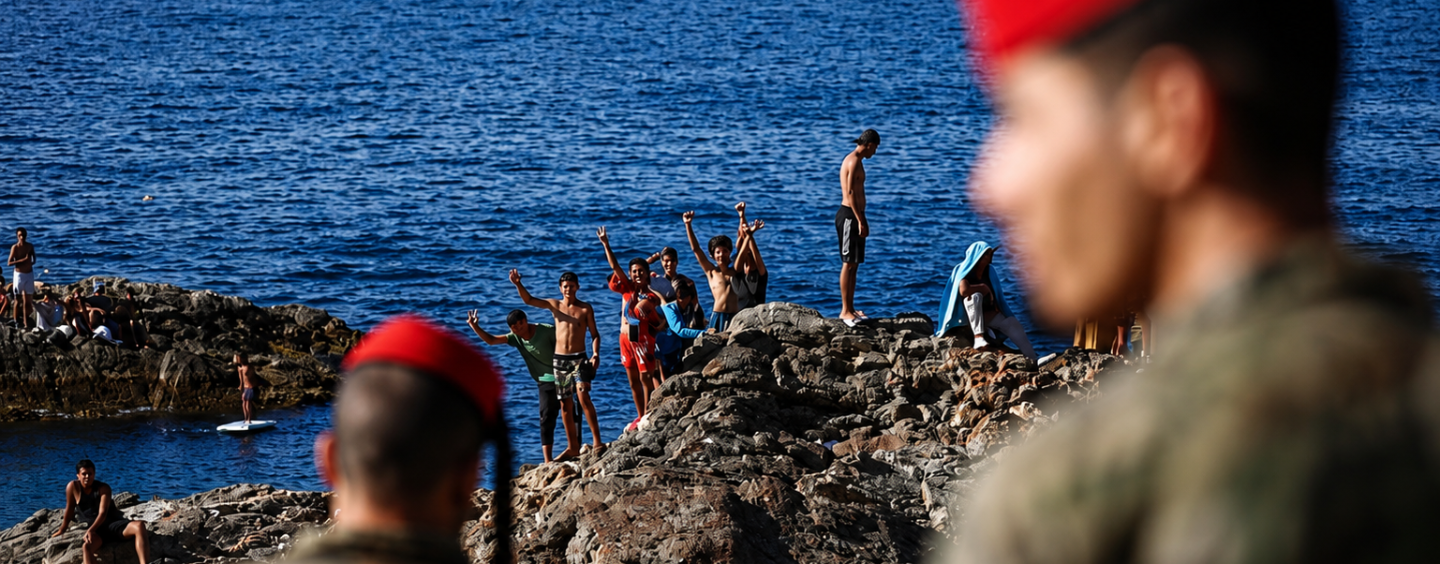
Ceuta occupies a unique position on the European map. Although located on the northern coast of Africa, it is an autonomous Spanish city and therefore part of the European Union. Together with Melilla, it represents the EU’s only land border with Africa. For decades Ceuta has been a focal point for irregular migration. Thousands of migrants have attempted to enter by climbing the border fences or swimming around the breakwaters separating Morocco from Spanish territory. Normally, however, Spanish and Moroccan authorities cooperate closely to limit crossings. The summer of 2026 proved dramatically different. Beginning in the final days of July, enormous numbers of mostly young Moroccan men headed toward Ceuta. Many attempted to swim around the barriers while others crossed through areas where border controls appeared to have weakened. Within days, the city was overwhelmed. Streets, reception centers, schools, sports halls and public buildings filled with exhausted migrants while emergency services struggled to maintain order.
Human tragedy on the border
The crisis quickly became a humanitarian catastrophe. Dozens of migrants drowned attempting to swim around the coastal barriers or died during stampedes and chaotic crowd movements. News reports estimated that more than 80 people lost their lives during the emergency, making it one of the deadliest migration incidents in the western Mediterranean in recent years. Many of those arriving were teenagers or young adults motivated by economic hardship rather than conflict. Morocco continues to struggle with high youth unemployment and limited opportunities in many regions. For many young people, Europe represents hope for employment and a better future. Yet most of those who reached Ceuta discovered that arrival did not guarantee entry into mainland Spain. Thousands were rapidly returned to Morocco or voluntarily went back once it became clear they would not be allowed to continue their journey. By early August, roughly 69,500 migrants had returned while only a few thousand remained inside Ceuta awaiting further processing.
The power of misinformation
One striking feature of the crisis was the role played by digital misinformation. According to Spanish authorities, false claims spread rapidly across TikTok, Facebook and Instagram suggesting that Spain had effectively opened its borders and that anyone reaching Ceuta would automatically receive legal residence or be allowed to travel into mainland Europe. These rumours were reportedly reinforced by misunderstandings surrounding a recent Spanish court ruling concerning summary expulsions at the Ceuta border. While the legal decision dealt with narrow procedural issues, online posts exaggerated its implications, creating the impression that Spain had abandoned border enforcement altogether. For thousands of young people facing unemployment and limited prospects, these rumours proved irresistible. Social media transformed local speculation into a mass movement almost overnight.
Was Morocco sending a message?
Perhaps the most politically sensitive question concerns Morocco’s role. Spanish intelligence officials and several political observers suggested that Moroccan border enforcement may have been deliberately relaxed. Such claims have not been conclusively proven, and Morocco has rejected accusations that it intentionally facilitated the crossings.
Nevertheless, the timing fueled speculation. Relations between Madrid and Rabat had become increasingly complicated due to Spain’s diplomatic contacts with Algeria, Morocco’s principal regional rival. Morocco has previously demonstrated its willingness to use migration as diplomatic leverage, most notably during the 2021 Ceuta crisis when thousands crossed after border controls were temporarily relaxed. Whether the 2026 events represented deliberate political pressure or simply an unexpected breakdown in border management remains contested. However, the perception that migration could once again be used as a geopolitical instrument profoundly influenced European reactions.
Europe’s divided response
The migration emergency immediately exposed deep political divisions within the European Union. Spain requested European solidarity while reinforcing security forces in Ceuta. Other member states expressed concern but differed sharply on how the crisis should be managed. Several governments argued for stronger external border controls and faster deportations. Others emphasized humanitarian obligations and international refugee law. France temporarily strengthened controls along its border with Spain, while Italy openly criticized Spain’s migration policies and called for tougher European measures. The disagreement reflected a broader problem that has existed since the migration crisis of 2015. Although the EU has adopted a new Pact on Migration and Asylum, implementation remains incomplete. Member states continue to disagree over burden-sharing, asylum procedures, relocation mechanisms and external border management. As a result, when sudden crises occur, national governments often respond independently rather than collectively.
Why Europe appeared paralyzed
The Ceuta crisis highlighted several structural weaknesses that explain Europe’s apparent paralysis. First, migration remains one of the most politically divided issues within the Union. Governments face competing domestic pressures between humanitarian responsibilities, border security and electoral concerns. Second, responsibility for protecting Europe’s external borders falls disproportionately upon frontline states such as Spain, Italy and Greece. While migration affects the entire Union, immediate operational responsibility often rests with individual member states. Third, migration has increasingly become intertwined with foreign policy. Cooperation with neighbouring countries such as Morocco, Turkey and Libya has become essential to managing migration flows. This gives those countries considerable diplomatic influence. Finally, digital communication has transformed migration itself. False information can now spread across continents within hours, encouraging thousands of people to move simultaneously before governments have time to react. Traditional migration management systems were never designed to cope with mobilization on this scale.
Lessons for the future
Although the immediate emergency at Ceuta gradually subsided, its political consequences are likely to endure.
The crisis demonstrated that Europe’s migration challenges cannot be solved solely through stronger fences or stricter asylum rules. They also involve diplomacy, economic development, digital information, regional stability and effective cooperation with neighbouring states. For Morocco, the events highlighted growing social pressures among unemployed youth. For Spain, they exposed the vulnerability of its North African territories. For the European Union, Ceuta became another reminder that migration remains one of the defining strategic challenges of the twenty-first century. Whether Europe learns from the events of August 2026 remains uncertain. The crisis showed remarkable solidarity among emergency workers, humanitarian organizations and residents. Yet it also revealed that political consensus remains elusive. Ultimately, Europe was not paralyzed because it lacked resources or institutions. It was paralyzed because migration sits at the intersection of humanitarian values, national sovereignty, domestic politics and international diplomacy. Until those competing priorities can be reconciled, future crises at Ceuta – or elsewhere along Europe’s external borders – are likely to provoke the same uncertainty, division and political hesitation witnessed during the dramatic days of August 2026.