
By Rovshan Pashazadeh
The world is entering a new phase of geopolitical transformation. The trilateral meeting between the leaders of the United States, China and Russia, held in Shenzhen, China, on 19 November 2026, raises new questions about the future direction of the global balance of power. These developments could have far-reaching implications for the international political system, economic relations, energy and transport routes, as well as regional security. The South Caucasus is one of the regions likely to feel the effects of these changes.
The coming decade will bring both new opportunities and significant challenges for Azerbaijan, Armenia and Georgia. The region’s future will depend not only on the interests of major powers but also on how the South Caucasus countries manage their relations with one another.
Great-Power Rivalry and Regional Balance
The trilateral meeting between the United States, China and Russia is an important political event reflecting the changing world order. The United States and China remain the principal players in the global system in terms of economic, technological and political power. Russia, despite its military and nuclear capabilities, energy resources and political influence, lags behind these two countries in economic and technological competition.
Although Moscow’s closer alignment with Beijing strengthens their strategic cooperation, the growing economic gap between the two countries could leave Russia increasingly dependent on China. This may also affect Moscow’s traditional influence in the South Caucasus.
At the same time, growing US and Chinese interest in the region, Türkiye’s strengthening position and the European Union’s involvement in energy and transport projects could contribute to a new geopolitical balance. In these circumstances, the main challenge for regional countries will be to safeguard their sovereignty and national interests amid competition between major powers.
Azerbaijan: From Regional Power to a Transit Hub
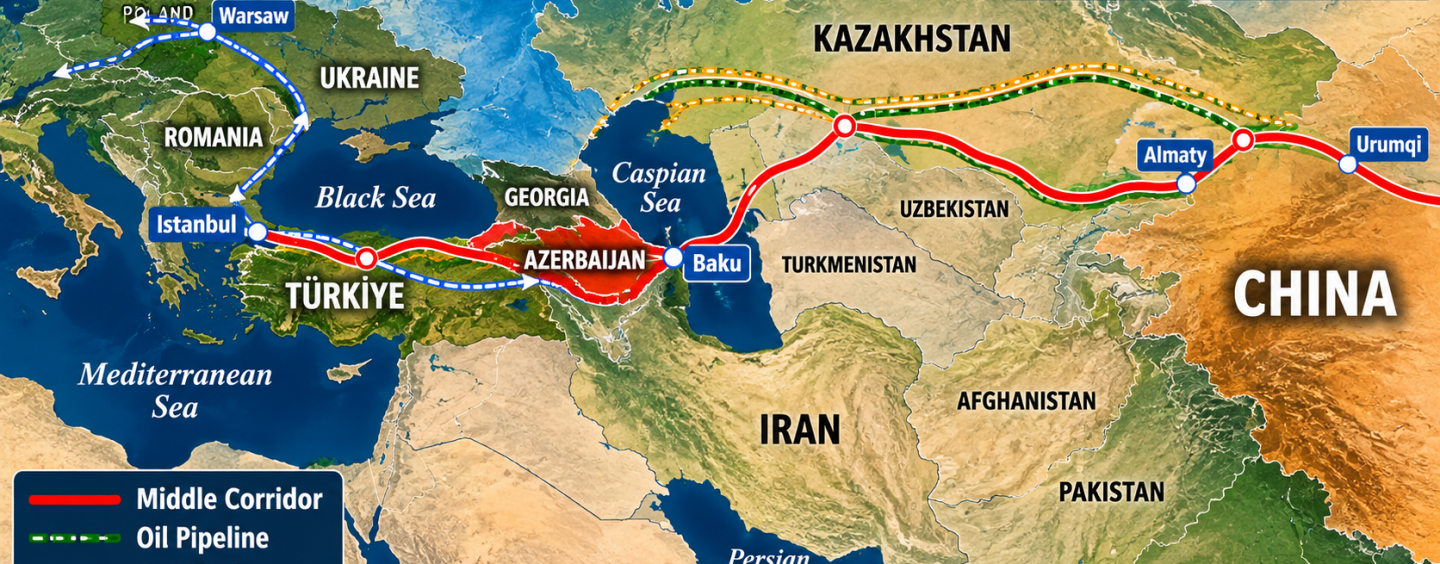
Azerbaijan’s geopolitical importance could grow further over the coming decade. Its energy potential, strategic alliance with Türkiye and geographical position along the Middle Corridor provide the country with significant advantages.
The opening of the Zangezur route, the expansion of transport and logistics infrastructure, and the development of green energy projects could strengthen Azerbaijan’s regional and international standing. However, its long-term influence will depend not merely on its geographical position but also on economic diversification, technological development and the ability to make independent decisions.
Azerbaijan’s key strategic advantage lies in its ability to maintain balanced relations with different centres of global power.
Armenia: Adapting to New Realities
Armenia’s future will largely depend on the normalisation of its relations with Azerbaijan and Türkiye. Decades of conflict and regional isolation have restricted the country’s economic and transport opportunities.
Consolidating peace with Azerbaijan, opening the border with Türkiye and restoring regional communications could create new economic prospects for Armenia. However, sustainable peace cannot be achieved through transport links alone. Mutual trust, respect for sovereignty, border delimitation and the resolution of security concerns are equally essential.
Georgia: A Test for Its Transit Position
For many years, Georgia has been one of the South Caucasus’ principal transit countries in connecting the region with Europe. The Baku–Tbilisi–Ceyhan oil pipeline, the South Caucasus Gas Pipeline and the Baku–Tbilisi–Kars railway are important examples of this cooperation.
The emergence of new transport links through Armenian territory could affect Georgia’s traditional transit position. Nevertheless, the development of its ports, railways and logistics infrastructure will give the country opportunities to preserve its regional importance.
In the future, complementarity within the regional transport network will be more important than competition.
The Regional Roles of Türkiye and Iran
The future of the South Caucasus cannot be assessed without taking into account the interests of Türkiye and Iran. Türkiye will continue to strengthen its position in the region through its strategic alliance with Azerbaijan, its ties with Central Asia and its access to European markets. The normalisation of relations with Armenia could also expand regional economic cooperation.
For Iran, the South Caucasus is of strategic importance in terms of security, borders and transit routes. New transport projects could have implications for Tehran’s regional policy. Consequently, relations between Türkiye and Iran will remain an important factor in the regional balance of power.
The Future of the South Caucasus: Three Possible Scenarios
Over the coming decade, the region’s development could follow three main scenarios.
Scenario One – Peace and Economic Integration.
The normalisation of relations between Azerbaijan and Armenia, the opening of the Türkiye–Armenia border and the expansion of transport links could transform the South Caucasus into a major economic hub connecting Europe and Asia.
Scenario Two – Geopolitical Competition.
Conflicting interests among the United States, China, Russia, Türkiye and the European Union could intensify political and economic competition in the region. Under these circumstances, a balanced foreign policy would become particularly important.
Scenario Three – New Tensions.
The continuation of the war in Ukraine, the expansion of conflicts in the Middle East and deteriorating relations between major powers could increase security risks in the South Caucasus.
Conclusion: Who Will Shape the Region’s Future?
The future of the South Caucasus will depend not only on relations between Washington, Beijing, Moscow, Ankara and Tehran, but also on the political choices made in Baku, Yerevan and Tbilisi.
If historical divisions are overcome and regional cooperation is strengthened, the South Caucasus could evolve from an arena of great-power rivalry into an important economic, energy and transport hub across Eurasia.
As 2036 approaches, the key question is not which major power will exercise the greatest influence over the region, but whether Azerbaijan, Armenia and Georgia will demonstrate their ability to make independent decisions and build a shared future. In the new world order, the greatest advantage will lie not simply in geographical or geopolitical position, but in stability, economic strength and strategic foresight.