
Azerbaijan and Italy are seeking to broaden their economic partnership beyond the traditional energy sector, focusing increasingly on industrial production, agriculture, critical minerals and investment. Recent high-level meetings in Baku between Azerbaijani and Italian officials point to a new phase in bilateral relations, with economic diversification becoming a shared priority.
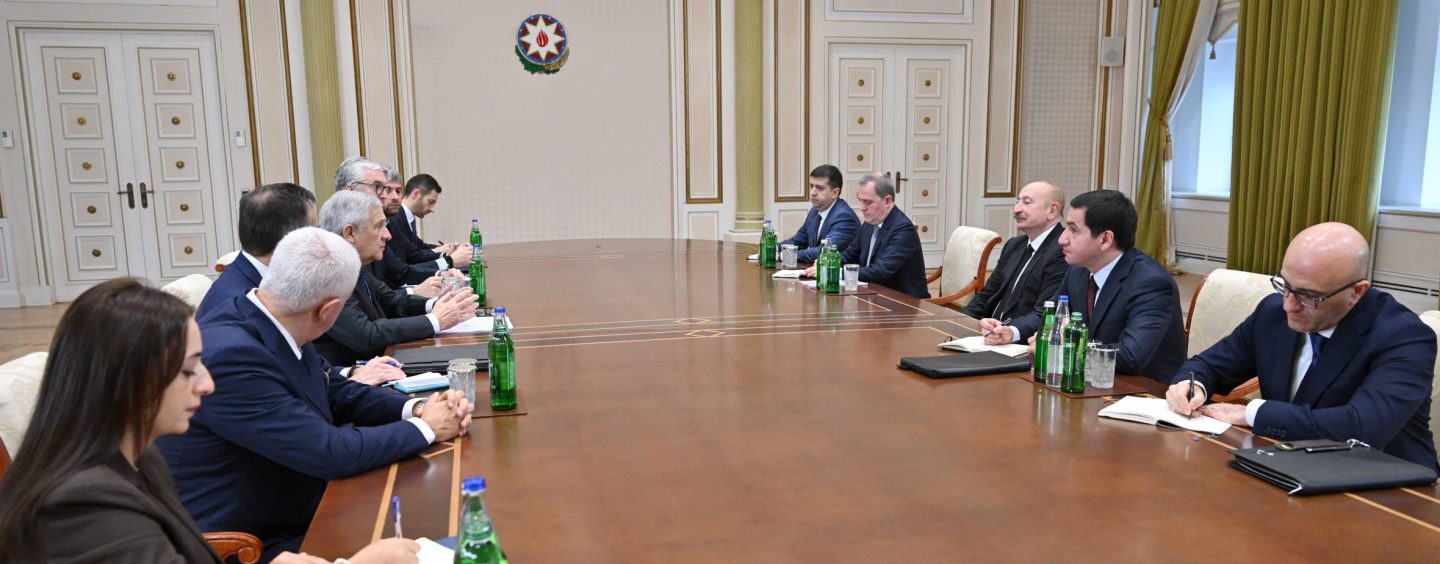
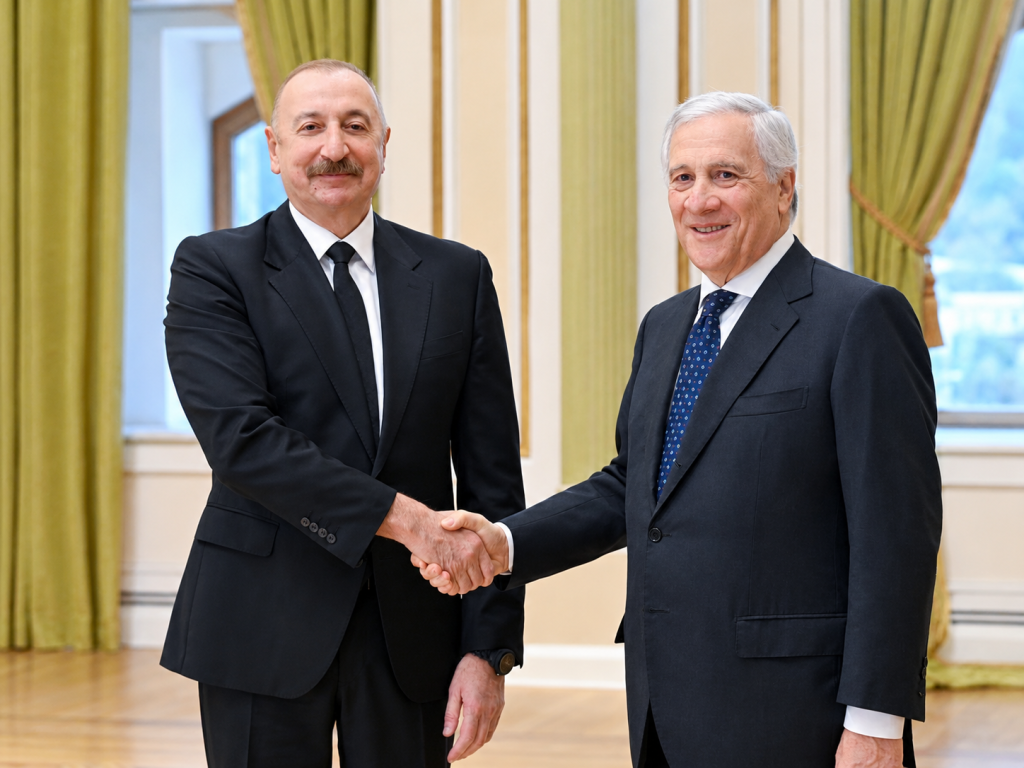
On 23 November, President of Azerbaijan Ilham Aliyev received Italian Deputy Prime Minister and Minister of Foreign Affairs and International Cooperation Antonio Tajani, who was visiting Baku. During the meeting, Aliyev highlighted the strong strategic partnership between the two countries, noting that high-level political contacts and mutual visits had contributed significantly to the development of bilateral relations.
The Azerbaijani President welcomed the growing presence of Italian companies in Azerbaijan and emphasised the importance of expanding large-scale investments. He also noted that Azerbaijan had strengthened its position in the Italian energy market through the acquisition of oil refining facilities and filling stations. The two sides discussed prospects for cooperation in trade, energy, industry, agriculture, defence, education and critical raw materials. Tajani, in turn, expressed Italy’s interest in increasing the number of companies operating in both countries.
Speaking at a joint press conference with Tajani in Baku on the same day, Azerbaijani Foreign Minister Jeyhun Bayramov said the two sides had discussed the possibility of supplying Azerbaijani mineral fertilisers to Italy. He stressed that Azerbaijan had significant production capacity and intended to develop new projects in this sector.
The initiative could open new opportunities for Azerbaijani exports to the European market. In 2025, Azerbaijan exported 543,600 tonnes of mineral fertilisers worth $170.8 million. Although export volumes fell by 3.8 per cent compared with 2024, their value increased by 35.3 per cent.
Beyond the Energy Partnership
Energy remains the foundation of Azerbaijan–Italy economic relations. Italy is Azerbaijan’s largest trading partner, with bilateral trade reaching $12 billion in 2025 and $9 billion in the first nine months of 2026.
However, cooperation is increasingly extending into investment and industrial development. A major milestone was SOCAR’s acquisition of a 99.82 per cent stake in the Italian company Italiana Petroli, completed in 2026. The investment demonstrates Azerbaijan’s growing interest in the Italian market and its ambition to strengthen its presence in Europe’s energy sector.
Investments by SOCAR and the State Oil Fund of Azerbaijan (SOFAZ) in Italian companies and funds further underline the expanding financial dimension of bilateral relations.
President Ilham Aliyev has also highlighted the importance of attracting further Italian investment into Azerbaijan, while welcoming the successful activities of Italian companies across various sectors of the country’s economy. The growing business presence reflects the potential to transform the established energy partnership into a broader economic relationship.
Critical Minerals: A Strategic Opportunity
Critical minerals represent another promising area of cooperation. Essential for renewable energy technologies, electric vehicles, batteries and advanced manufacturing, these resources have become strategically important for Europe.
Azerbaijan could contribute through its own mineral reserves and by serving as a transit route for supplies from Central Asia. Their processing in the Alat Free Economic Zone, with Italian technological participation, could create higher-value products and strengthen Azerbaijan’s role in regional industrial supply chains.
The cooperation agreement signed by the two countries in October provides a basis for developing projects in this field, including potential cooperation in third countries. The issue was also discussed during Aliyev’s meeting with Tajani, underlining its growing importance in the bilateral agenda.
A Broader Economic Alliance
Agriculture, tourism, pharmaceuticals and other industrial sectors also offer opportunities for closer cooperation. Italian companies could bring investment, advanced technologies and industrial expertise, while Azerbaijan provides access to a strategically located market connecting Europe with the Caspian region and Central Asia.
The preparation of 20 bilateral legal and contractual documents, announced by Bayramov, reflects both governments’ intention to improve the business environment and encourage new projects.
The Azerbaijan–Italy Business Forum, which brought together more than 240 representatives of companies and business associations from the two countries, provided an additional platform for identifying investment opportunities and establishing new business contacts.
The growing partnership has significance beyond bilateral trade. As Europe seeks to diversify its energy supplies and industrial supply chains, Azerbaijan’s geographical position, transport infrastructure and economic potential are becoming increasingly important.
The proposed fertiliser exports may therefore represent more than a new commercial opportunity. They reflect a broader ambition to transform the established energy partnership into a diversified economic alliance based on industrial cooperation, investment and higher-value production.
The challenge for both countries is to translate these ambitions into sustainable projects and give Azerbaijan–Italy relations a stronger economic foundation beyond energy.