

By Oleksandr Fediienko, Head of the Subcommittee on Cybersecurity, Government Communications, and Cryptographic Information Protection of the Verkhovna Rada of Ukraine Committee on National Security, Defense and Intelligence.
Four and a half years of full-scale war have changed not only the Ukrainian army, but also the very understanding of modern warfare. Ukraine has gradually transformed from a state that primarily received ready-made weapons from its partners into a country that develops military technologies itself, scales up the production of unmanned systems, and shares its combat experience with its partners.
In fact, Ukraine has become a huge testing ground for weapons.
I believe this has also influenced the nature of Ukraine’s international relations. Today, Kyiv is increasingly offering its partners not only political cooperation or weapons procurement, but also specific technologies, joint production, and experience gained directly on the battlefield.
Ukraine is opening many enterprises on the territory of EU countries.
Over the past several years, Ukraine and Azerbaijan have been trying to expand bilateral cooperation. This became particularly tangible in April 2026, when Volodymyr Zelenskyy made his first visit to Azerbaijan as President of Ukraine.
On April 25, in Gabala, Zelenskyy and Ilham Aliyev held talks during which they discussed security, energy, and humanitarian cooperation. Following the meetings, six bilateral documents were signed.
The Ukrainian side separately identified security and the defense industry as priority areas, while the President of Azerbaijan stated that there was potential for military-technical cooperation.
A Ukrainian expert team was already working in Azerbaijan, sharing Ukraine’s experience in protecting its airspace and critical infrastructure from aerial attacks. The work involved assessing existing capabilities and developing further areas of cooperation in countering drones and other airborne threats.
This means that we are no longer talking simply about diplomatic support. Ukraine is effectively beginning to export its own military experience.
This is an important change. Over the years of war, Ukraine has gained unique experience in countering massive missile and drone attacks, using unmanned systems, protecting critical infrastructure, and organizing combat systems in a real high-intensity conflict.
Ukraine has gained experience that is not found in any military doctrine of any country in the world.
Therefore, the most realistic areas of Ukrainian-Azerbaijani cooperation in the coming years are those that already have practical confirmation: the defense industry, military-technical cooperation, counter-drone capabilities, critical infrastructure protection, and energy.
The important thing is not to attribute to the parties anything they have not officially announced yet. Specific future joint ventures or specific weapons systems cannot currently be described as agreed projects without the relevant documents.
The Price Russia Is Paying for the War
Another issue is the scale of Russian losses.
According to the General Staff of the Armed Forces of Ukraine, as of August 12, 2026, total Russian military losses since the beginning of the full-scale invasion were estimated at approximately 1,461,660 personnel.
The Ukrainian General Staff also estimated Russian losses at 12,259 tanks, 25,127 armored combat vehicles, 47,773 artillery systems, 2,022 multiple-launch rocket systems, 1,561 air-defense systems, 439 aircraft, and 354 helicopters. The figures also included more than 132,000 vehicles and fuel tankers, as well as more than 456,000 operational-tactical UAVs.
These figures must be interpreted correctly. They are an estimate by the Ukrainian General Staff, not an independent international audit.
Therefore, in a public publication, it is appropriate to say specifically: “according to the estimate of the Ukrainian General Staff.”
At the same time, the scale of Russian losses is also confirmed by Western research centers, although their methodologies and figures differ.
For example, the American Center for Strategic and International Studies estimated Russian battlefield losses from February 2022 through December 2025 at approximately 1.2 million personnel, including those killed, wounded, and missing. CSIS estimated the number of Russian fatalities at between 275,000 and 325,000.
Thus, the difference between the Ukrainian and Western estimates is primarily explained by methodology and by the different periods covered by the calculations. But both assessments point to the same fact: Russia has suffered extraordinarily heavy human losses.
July 2026 was also significant.
According to Ukraine’s Ministry of Defense, Russian personnel losses during the month amounted to 42,860 military personnel — the highest monthly figure since January 2025. During the same month, the Ukrainian side reported that nearly 14,000 pieces of Russian automotive equipment had been destroyed or damaged.
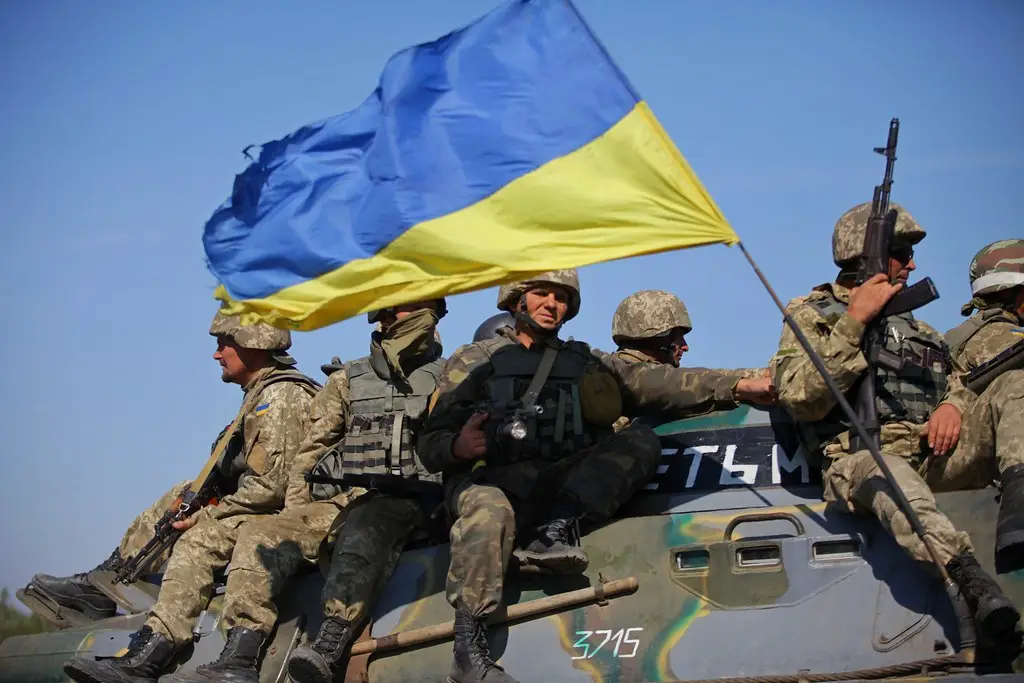
The War Is Gradually Moving Deeper into Russia
However, assessing Russian losses solely by the number of military personnel and pieces of equipment destroyed is no longer sufficient.
Ukraine is systematically striking facilities that sustain the Russian war machine: oil refineries, logistics hubs, warehouses, military facilities, and other elements of infrastructure.
This trend became particularly visible in 2026.
Ukrainian strikes against Russia’s oil infrastructure have already created problems for the operation of refining capacity and the domestic fuel market.
Attacks on rear-area infrastructure have become such a serious problem for Russia that the state has been forced to strengthen direct control over the protection of critical facilities.
But here, too, it is necessary to avoid exaggeration.
This does not mean that the Russian economy or military-industrial complex has collapsed. Russia continues to wage war, produce weapons, mobilize resources, and maintain significant military capabilities.
It is more accurate to speak of a systematic increase in the cost of the war for Russia.
The Drone Has Become One of the Main Instruments of War
Over four and a half years, drones have evolved from an auxiliary reconnaissance tool into one of the central components of combat operations.
FPV drones are used to strike personnel, armored vehicles, artillery, and other targets. Reconnaissance UAVs provide target detection and fire correction. Long-range unmanned systems make it possible to strike targets far beyond the front line.
But Ukraine is now moving to the next stage.
This involves combining unmanned systems with artificial intelligence, battlefield management systems, automated target recognition, and other autonomous technologies.
On August 24, 2026, the United Kingdom and Ukraine signed a partnership in the field of military artificial intelligence.
British researchers gained access to the Ukrainian platform Avengers AI Labs, built on a dataset of approximately five million annotated battlefield images, a significant portion of which originates from the DELTA system.
According to Ukraine’s Ministry of Defense, the algorithms already analyze more than 100,000 drone video streams every month and can identify approximately 70% of enemy targets in real time. This demonstrates just how far the technological dimension of warfare has shifted.
The future of drone warfare is no longer simply “a drone against a tank.” It is a network in which reconnaissance, sensors, artificial intelligence, communications, electronic warfare, operators, and strike systems function as a single system.
Ukraine has one fundamental advantage here: an enormous body of real combat experience.
And this experience is becoming a new type of military resource that Ukraine can share with its partners.
The Future Peace
The most difficult question is what the future peace should look like.
As of August 2026, the negotiation process has not been concluded.
Ukraine says it is ready for a diplomatic settlement, but the key problem remains the incompatibility of the parties’ positions on territory and security guarantees.
Ukraine, together with the United States and European partners, has prepared proposals that include a ceasefire and other elements of a future settlement.
At the same time, Russia continues to insist on its territorial demands.
For Ukraine, the fundamental point is that peace cannot mean simply ending hostilities without mechanisms that would prevent Russia from starting a new war several years later.
That is why the issue of security guarantees is no less important than the issue of a ceasefire.
Ukraine’s position is also that a peace settlement must not mean voluntary capitulation or the legal recognition of the occupation of Ukrainian territories.
On August 24, during events marking Ukraine’s Independence Day, the President of Ukraine stated directly that Ukraine seeks peace but is not prepared simply to surrender.
At the same time, more than 50 countries, in a joint statement at the United Nations, called on Russia to agree to an immediate, complete, and unconditional ceasefire.
Thus, Ukraine’s “red lines” can be formulated not as a desire to continue the war, but rather as requirements to ensure that its conclusion is sustainable.
These include the cessation of hostilities, credible security guarantees, Ukraine’s continued right to independently determine its foreign and security policy, non-recognition of the seizure of territories as lawful, and preservation of the Ukrainian military’s ability to defend the state in the future.
A Ukraine That Has Changed
Four and a half years of war have demonstrated one important thing: Ukraine is no longer the same state that entered the full-scale war in February 2022.
It has gained enormous combat experience, created its own unmanned-systems industry, developed long-range capabilities, learned how to strike the enemy’s military and energy infrastructure, and is now sharing its technological expertise with other countries.
Ukraine has the strongest combat-capable army in Europe.
Russia’s need to defend not only the front line but also oil refineries, logistics hubs, warehouses, and other critical infrastructure is one of the indicators of how dramatically the geography of the war has changed.
But the main conclusion lies elsewhere.
Ukraine cannot build its future solely on how much enemy equipment it manages to destroy. Its long-term advantage will depend on whether it can transform the experience gained during the war into a sustainable defense industry, technological superiority, a strong military, and a system of international security guarantees.
This will determine not only the outcome of the current war, but also Ukraine’s security after it ends.