
By Rovshan Pashazadeh
Independent thinking often means being prepared to face criticism, disagreement and external pressure. This applies not only to individuals but also to states seeking to protect their national interests and pursue an independent political course. For Azerbaijan, situated in a complex geopolitical environment and surrounded by neighbours such as Russia, Armenia and Iran, maintaining an independent domestic and foreign policy is both a strategic necessity and a fundamental responsibility.
In my view, state sovereignty means more than protecting territorial integrity and national borders. It also includes the right to determine the country’s political priorities, legal principles and social policies without undue external interference. A sovereign state must be able to maintain friendly international relations while making decisions in accordance with its own Constitution, laws and national interests.
This principle is particularly important when questions of religion, education and social values arise. Azerbaijan is a secular state, and preserving its secular character is an essential element of its statehood. Secularism does not mean hostility towards religion; rather, it ensures that people with different beliefs coexist under a common legal framework and that public institutions act impartially.
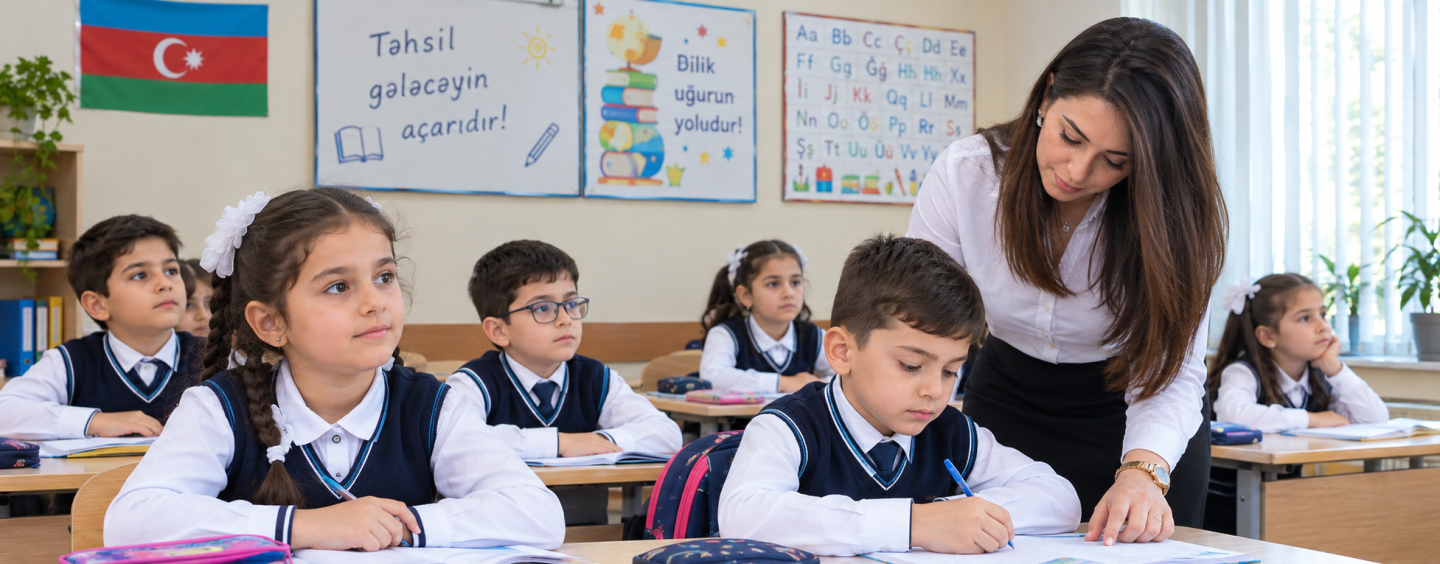
One issue deserving particular attention is the wearing of religious clothing by young children in educational institutions. Schools should provide an environment that encourages learning, critical thinking and the development of independent individuals. While freedom of religion must be respected, children’s rights and freedom from coercion are equally important. Young children may not yet be able to make fully independent decisions about religious practices. In my opinion, imposing religious dress on young children in educational settings is unacceptable. Protecting children in this context should be understood not as restricting religion, but as safeguarding their freedom to develop and form their own views without undue pressure.
Such matters should be addressed through Azerbaijan’s own legal framework, public institutions and informed public debate. The aim should be to maintain a reasonable balance between religious freedom, children’s rights, educational priorities and the secular principles of the state, rather than automatically adopting approaches shaped by the historical and cultural circumstances of other countries.
The same principle applies to Azerbaijan’s relations with neighbouring states and international partners. The political or religious preferences of Russia, Iran or any other country should not determine Azerbaijan’s domestic policies. Nor should the views of friendly and brotherly Türkiye be considered binding simply because the two countries share deep historical, cultural and linguistic ties.
Azerbaijan and Türkiye enjoy a special relationship founded on mutual trust, strategic cooperation and brotherhood. This partnership is important to both countries and contributes to regional stability. However, genuine friendship between sovereign states must be based on equality and mutual respect. Strategic partnership does not require identical positions on every domestic or social issue. Instead, it should allow both countries to express their views openly while respecting each other’s sovereign choices.
It is important to distinguish constructive dialogue from external pressure. Listening to other governments, learning from their experiences and considering alternative approaches can strengthen international relations. However, dialogue loses its value when one country expects another to subordinate its domestic decisions to external political or religious preferences. No state should have to compromise its constitutional principles simply to meet another country’s expectations.
Independent policymaking does not mean isolation or rejection of international cooperation. Azerbaijan’s future is closely linked to regional peace, economic development, trade and diplomatic engagement. Constructive relations with neighbouring countries and strategic partners remain essential, but sustainable cooperation must be built on mutual respect and recognition of each state’s right to determine its own priorities within international law.
Ultimately, a state’s strength is measured not only by its economic capacity, military capabilities or diplomatic influence, but also by its commitment to sovereignty and fundamental principles. Decisions made primarily to avoid criticism or accommodate external expectations can weaken institutions and undermine public confidence.
For Azerbaijan, preserving independence means remaining open to dialogue while ensuring that national decisions are guided by the Constitution, the rule of law, national interests and the long-term welfare of society. Shared history, cultural affinity and friendly relations should strengthen mutual respect, not become grounds for interference.