By Rovshan Pashazadeh
People sometimes believe they are the authors of their own destiny. They think they can choose what to believe in and determine their own path. Yet time passes, history delivers its verdict, and they come to realise that they have lived not only their own lives, but also the hopes, illusions and tragedies of their age.
My family’s history spans three generations and three distinct worlds. My grandfather, Hadi Pashazadeh, believed in the revolution. My father, Tahir Pashazadeh, lived by the ideals of communist ideology. I belong to a generation that witnessed the collapse of the system in which they had placed their faith. Their lives have left me with questions that time can no longer answer.
This is not merely the story of one family. It is a reflection on the human cost of history and the enduring struggle to understand those who came before us.
My Grandfather — From Revolutionary Hope to the Shadow of Fear
My grandfather, Hadi Pasha oglu Akhundov, adopted the surname Pashazadeh to preserve his father’s name. According to family accounts, he was involved in the printing of Iskra, the Bolshevik revolutionary newspaper, at Baku’s Nina printing house. In the 1970s, Bakinski Rabochi published an article about his participation in this activity.
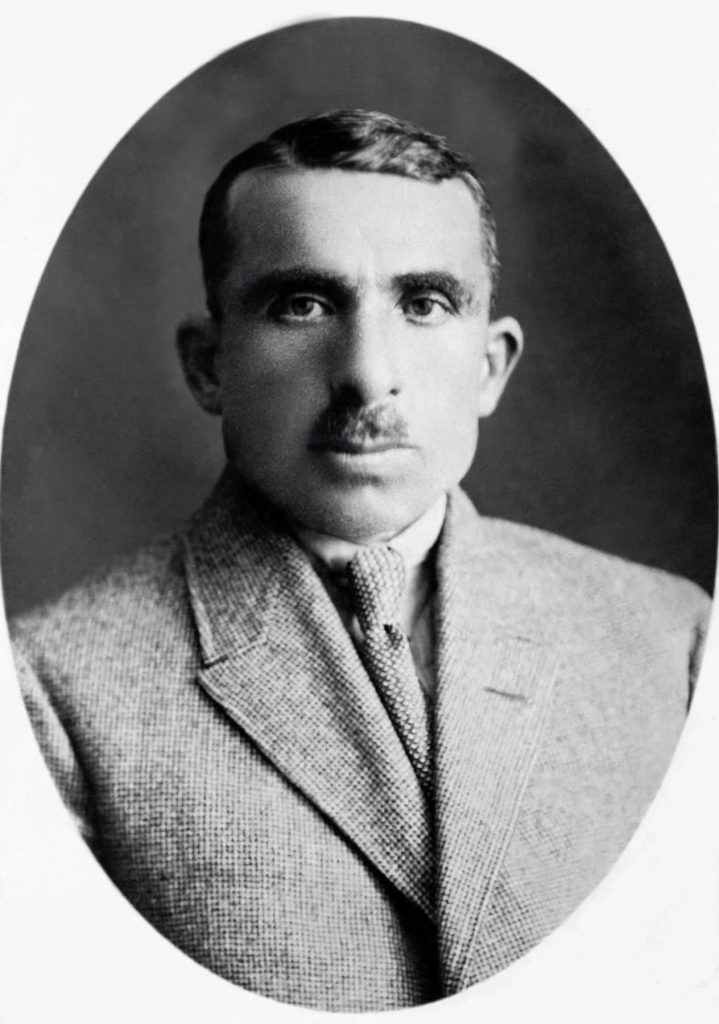
He believed in the revolution’s promises of justice and equality. His identity document recorded his nationality as “Turk”. He taught Persian at the Faculty of Oriental Studies of Baku State University and later held a senior position in the public education system. His family respected his knowledge and intellect, addressing him affectionately as “Agha Dayi”.
Yet the hopes of revolution were eventually overshadowed by fear. Having witnessed Stalin’s repressions, my grandfather forbade his son from speaking about Stalin or even mentioning his name. The saying “Even the walls have ears” captured the atmosphere in which people learned to distrust silence itself. Fear had entered their homes, their conversations and even the relationship between father and son.
A man who had once believed in building a new world came to live with the knowledge that this world could inspire terror within his own family.
Perhaps my grandfather wanted only to protect his son. I cannot know for certain. But I often wonder what he felt when the ideals he had embraced became inseparable from the fear that governed everyday life.
My Father — A World He Never Knew Would Fall Apart
My father, Tahir Pashazadeh, was my grandfather’s only child. He studied Persian at Baku State University’s Faculty of Oriental Studies and later graduated from the Higher Party School in Moscow. A committed believer in communist ideology, he held senior positions in Azerbaijan’s State Committee for Television and Radio Broadcasting until 1990.
For my grandfather, the revolution had promised a different future. For my father, the system it created had become the world he knew, the framework within which he built his career and raised his three children.
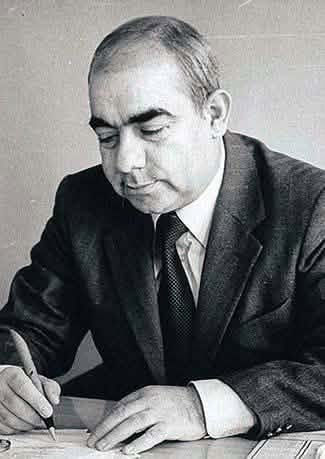
I cannot fully know his private thoughts or doubts, and I do not wish to judge him solely by his political convictions. He was a man shaped by his time, with his own responsibilities, hopes and understanding of the world.
The tragedy of 20 January 1990, when Soviet troops intervened in Baku, became one of the darkest chapters in Azerbaijan’s history. Lives were lost, families were plunged into mourning, and a wound was left in the nation’s collective memory.
My father was deeply affected by the grave circumstances that followed those events. I find it difficult to consider his death separately from the January tragedy, although I cannot establish a direct causal connection. In my memory, both remain painful chapters of the same historical period.
History records deaths in numbers, but statistics cannot convey the emptiness left by a loved one, the conversations that never took place or the questions that remain unanswered.
My father’s life has taught me that understanding history requires more than examining political systems. It also demands that we look closely at the individuals who lived within them.
I — Between Two Worlds
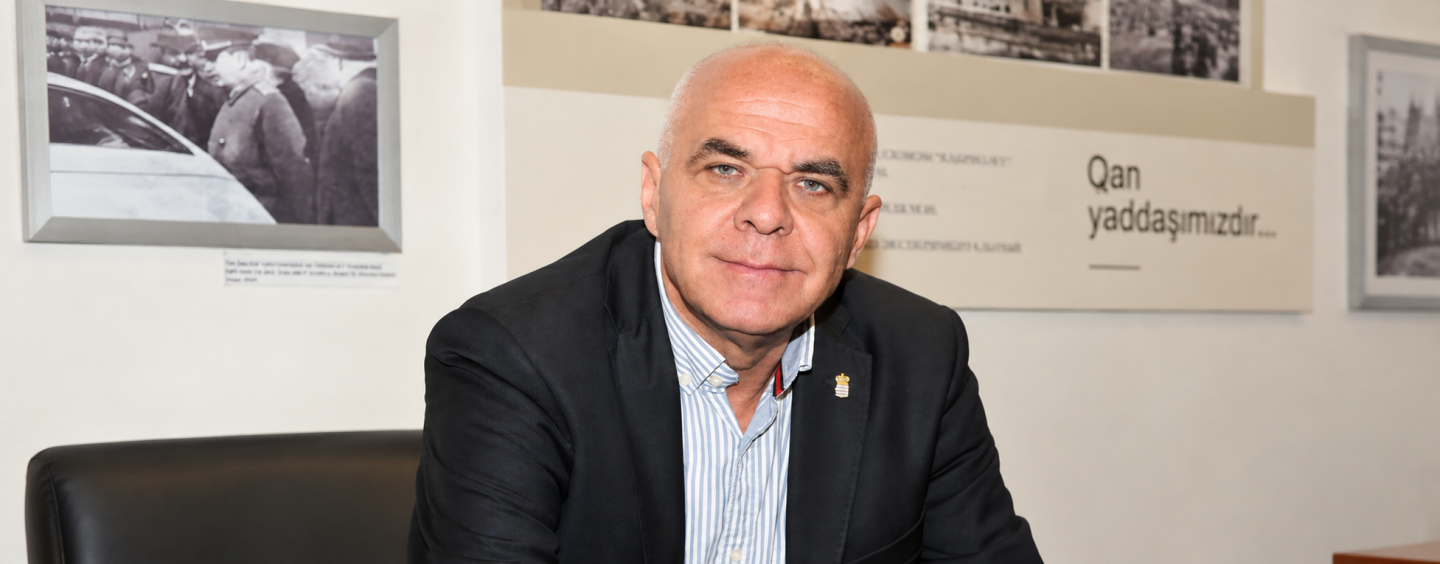
I am Rovshan Pashazadeh, born during the Soviet era and a witness to Azerbaijan’s second period of independence. I studied at an art school before graduating from the Faculty of Theatre Studies at the Institute of Arts. I subsequently worked in various state institutions. Today, I publish Azerbaijan Today, an English-language magazine for an international readership.
My world is neither my grandfather’s revolutionary era nor the Soviet system in which my father spent much of his life. I belong to a generation that witnessed the collapse of an established order, the questioning of inherited truths and the emergence of new realities.
When I reflect on their lives, I find myself wishing I could ask them the questions that have accompanied me for years.
I would ask my grandfather: “What drew you to the revolution? Was it the promise of justice, faith in the future or the force of history itself? What did you feel when the world you had helped build became a place where people were afraid to speak?”
I would ask my father: “Were you happy in the world in which you lived? Did your faith in ideology give you strength? How did you imagine Azerbaijan’s future? Did you ever believe that the system to which you devoted so much of your life would one day collapse?”
I will never hear their answers.
Time takes our loved ones away, but it also takes away the possibility of resolving what was left unexplained. Perhaps this is one of the deepest forms of loss: a conversation continues within us long after the other voice has fallen silent.
I do not wish to condemn my grandfather for his revolutionary beliefs or my father for his commitment to communism. I want to understand them within the circumstances of their respective eras, with their hopes, convictions and fears. Political systems disappear and ideologies pass into history, but the lives people lived within them remain part of our collective memory.
My task is to preserve their stories without becoming a prisoner of the past. I want to understand what shaped them, recognise the lessons their experiences offer and continue searching for answers of my own.
The Verdict of History, the Memory of a Human Life
When I reflect on my grandfather and father, I see more than opposing political convictions. I see two lives connected by family ties yet shaped by different historical realities. Each made choices according to what he believed, without knowing what the future would bring.
My grandfather could not have foreseen the full extent of the repressions. My father could not have imagined the collapse of the Soviet system and the profound changes that would follow. Nor can I know how future generations will judge the era in which I live.
History teaches us that no political system lasts for ever and no ideology can answer every human question. People may devote their lives to a world they believe in, only to see it transformed beyond recognition.
My grandfather, Hadi Pashazadeh. My father, Tahir Pashazadeh. And I, Rovshan Pashazadeh.
Three names. Three generations. Three worlds.
In one, the hope of revolution; in another, faith in an ideology; and in mine, the search for understanding.
I have written this story not to pass judgement on the past, but to ensure that the voices of my grandfather and father do not fade from my memory. Their lives are part of my family’s history, but they also reveal how profoundly changing times can shape human destinies.
A person’s true legacy lies not in the political system they served or the ideology they embraced, but in the memories they leave behind, the lessons they pass on to future generations and, above all, the humanity that endures after everything else has changed.