
By Rovshan Pashazadeh
Relations between Azerbaijan and Türkiye are built on shared history, culture and national values, as well as mutual political and economic interests. Described by Heydar Aliyev as “One Nation, Two States”, this partnership has evolved into a strategic alliance with growing regional and international significance.
For Türkiye, Azerbaijan is a key partner in the South Caucasus and an important link to the Caspian basin and Central Asia. Its geographical position, energy resources and role in international transport corridors strengthen its importance in Ankara’s foreign policy.
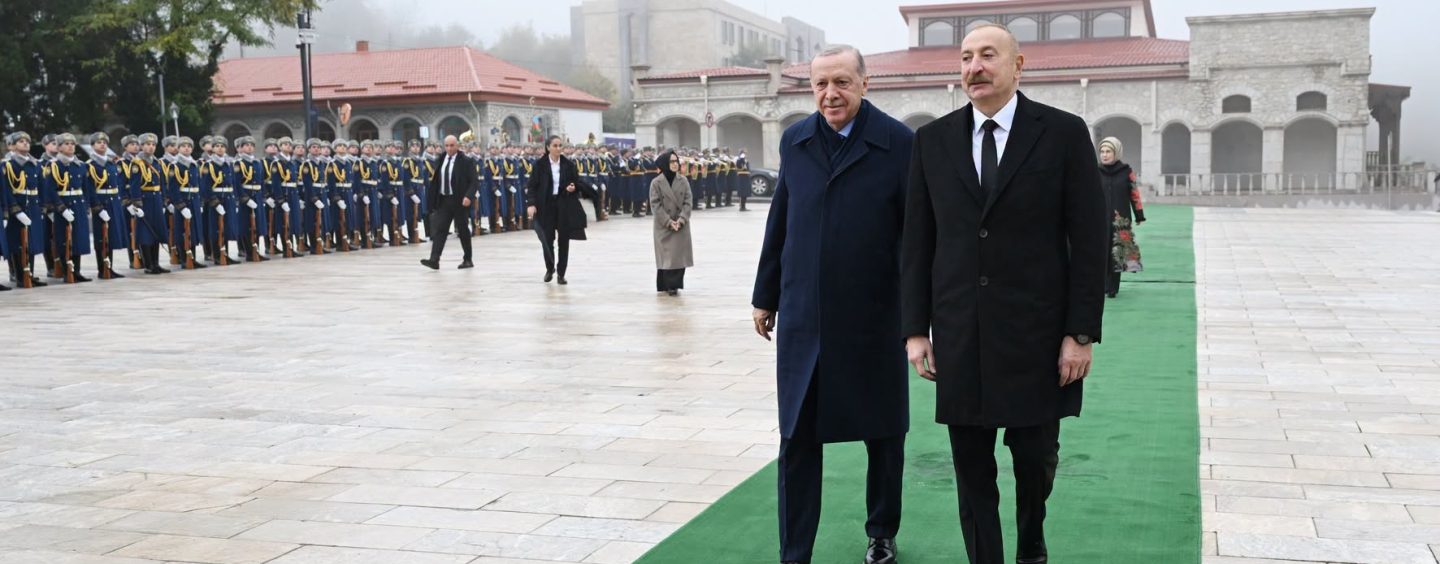
President Recep Tayyip Erdoğan’s visit to Shusha on 8 November 2026, marking Victory Day, once again highlighted the political significance of this alliance amid changing regional dynamics.
Azerbaijan’s Geopolitical Importance to Türkiye
Azerbaijan plays a central role in Türkiye’s relations with the South Caucasus and Central Asia. Its growing ties with Kazakhstan, Uzbekistan and Turkmenistan also strengthen regional cooperation within the Turkic world.
The Organisation of Turkic States provides an additional framework for expanding political, economic and cultural ties. In this context, Azerbaijan is not merely a bilateral partner but a key participant in Türkiye’s wider regional strategy.
Energy and Transport: Strategic Priorities
Energy cooperation remains one of the main pillars of bilateral relations. The Baku–Tbilisi–Ceyhan pipeline, Baku–Tbilisi–Erzurum pipeline and TANAP connect Azerbaijan’s energy resources with Türkiye and European markets, strengthening regional energy security.
The Middle Corridor is another important area of cooperation. The Baku–Tbilisi–Kars railway and Caspian transport links offer alternative trade routes between Europe and Asia, increasing their importance amid geopolitical tensions.
The proposed development of the Zangazur route could further strengthen connectivity between Azerbaijan and Türkiye. Its implementation, however, should respect sovereignty, territorial integrity and the interests of all countries concerned.
The Shusha Declaration and Defence Cooperation
Signed on 15 June 2021, the Shusha Declaration elevated Azerbaijan–Türkiye relations to the level of a formal alliance, providing a framework for cooperation in defence, security, the economy and foreign policy.
Defence industry cooperation, military technology, unmanned aerial vehicles and joint production are among its key practical dimensions. These efforts strengthen Azerbaijan’s defence capabilities while contributing to Türkiye’s strategic interests in the South Caucasus.
The Political Significance of Erdoğan’s Visit to Shusha
President Erdoğan’s visit to Shusha on Victory Day reaffirmed Ankara’s commitment to its alliance with Azerbaijan. His visits to the Khojaly Memorial and the Victory Monument in Khankendi added further historical and political significance to the occasion.
At their joint press conference, President Ilham Aliyev stressed that no force could undermine the friendship between the two nations. President Erdoğan, in turn, reaffirmed Türkiye’s continued support for Azerbaijan.
The visit also carried a broader political message. By returning to Shusha, where the Shusha Declaration was signed, Erdoğan underlined the importance Türkiye attaches to Azerbaijan’s sovereignty and regional position.
At a time of changing security dynamics in the South Caucasus, coordination between Baku and Ankara remains an important factor in regional stability and cooperation.
Different Approaches, Shared Strategic Interests
A strategic alliance does not mean that Azerbaijan and Türkiye must hold identical positions on every regional and international issue. Both countries pursue independent foreign policies and make decisions based on their national interests.
Differences in approach are natural. What matters is addressing them through mutual respect, trust and political dialogue. The strength of the alliance depends not only on historical and cultural ties, but also on the ability to accommodate each other’s interests.
Conclusion
Azerbaijan is strategically important to Türkiye because of its position in the South Caucasus, access to Central Asia, energy resources and transport links. Türkiye, in turn, remains one of Azerbaijan’s principal partners in defence, economic development and international cooperation.
Erdoğan’s visit to Shusha demonstrated that the Baku–Ankara alliance rests on both historical bonds and concrete geopolitical interests. Its future strength will depend on mutual trust, respect for national interests and practical cooperation.
Today, Shusha represents not only the shared political legacy of Azerbaijan and Türkiye, but also their common strategic vision for the future.


