
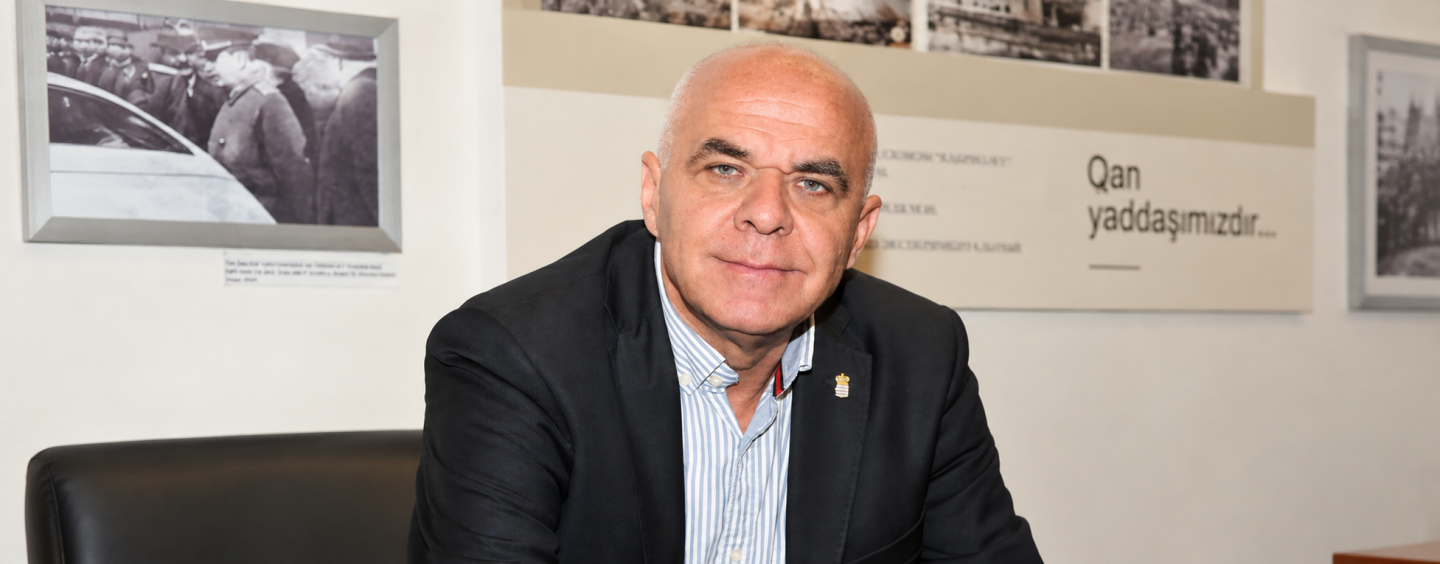
By Rovshan Pashazadeh
In the late nineteenth and early twentieth centuries, Baku was undergoing a remarkable transformation. A city where the ancient traditions of the East met Europe’s emerging industrial culture, it had captured the world’s attention with its oil boom. The activities of the Nobel brothers and local oil magnates had turned Baku into a major industrial centre, attracting thousands of people from Russia, Europe and different parts of Azerbaijan.
It was against this backdrop that Mukhtar was born in the ancient village of Mashtaga, near Baku. He grew up in a family deeply rooted in religious tradition. His grandfather, Sheikh Amir, had studied in Cairo and was a respected religious scholar, admired for his learning and generosity. He regularly helped those in need in the village, doing whatever he could to ensure that no one was left without support.
One of Mukhtar’s earliest childhood memories was of the gold ornaments his grandfather had brought back from Egypt. They awakened in him a fascination with the art of goldsmithing. When he was fourteen, his father took him to Baku. During their visit, Mukhtar came across a small jewellery workshop and was captivated by the craftsman’s skill. Although his father soon led him away, the sight remained etched in his memory. Back in the village, he told his grandfather of his wish to become a goldsmith. Sheikh Amir encouraged him and eventually persuaded his father to let the boy pursue the craft.
Mukhtar went on to master the art of goldsmithing and, in time, opened his own workshop. His craftsmanship, diligence and refined taste earned him the trust and respect of his customers. He married Saadat, and together they raised four daughters. Through years of hard work, he built a home for his family and sought to provide them with a secure and comfortable life. He also carried forward the tradition of generosity he had inherited from his grandfather, extending a helping hand to those in need.
But the political upheavals sweeping through the country were beginning to shatter ordinary lives. During the Stalinist purges, Mukhtar’s own fate took a tragic turn.
One day, a poorly dressed man who had previously approached him for help returned to his workshop. He explained that a member of his family was seriously ill and appealed to Mukhtar for assistance. Without hesitation, Mukhtar handed him one of his ten-rouble gold coins bearing the image of Tsar Nicholas II.
“If you can, pay me back. If you cannot, it is no great matter. I am doing this for the sake of God.”
Overcome with gratitude, the man tried to kiss Mukhtar’s hands, but Mukhtar gently refused. The visitor left, promising never to forget the kindness shown to him.
Only later did the truth emerge: the man was a secret informant working for the NKVD, the Soviet security agency. He would ingratiate himself with people of relatively comfortable means, such as Mukhtar, exploit their trust and generosity, and pass information about them to the repressive authorities.
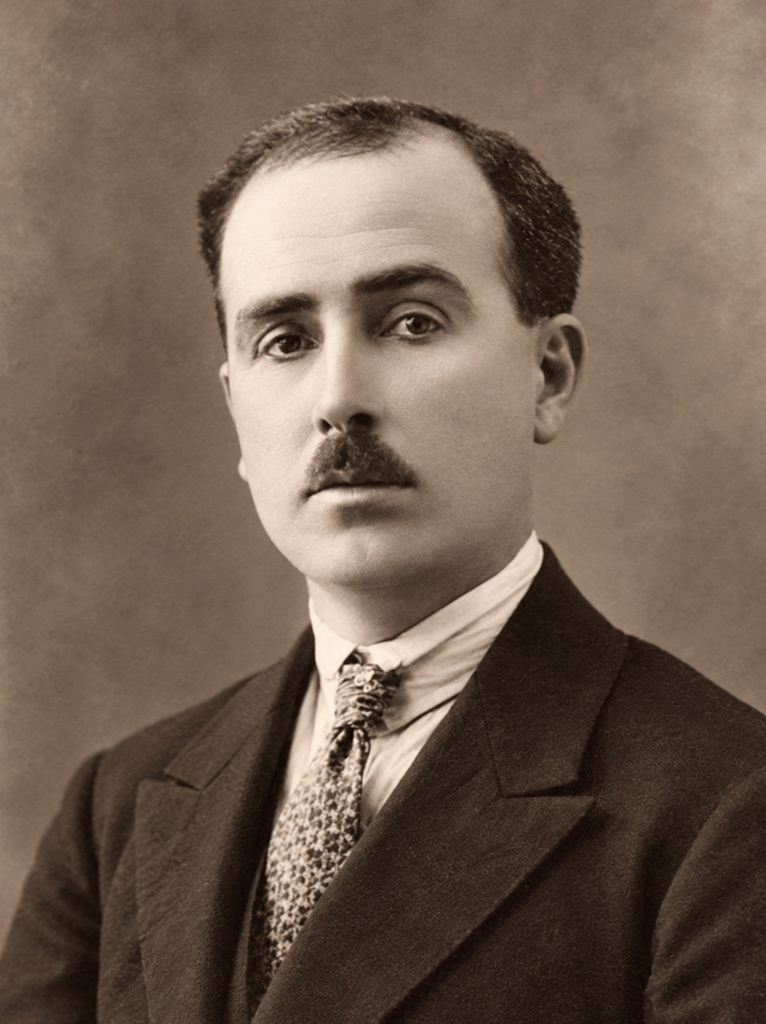
Following Mukhtar’s arrest, Saadat was left to face an uncertain future alone with their four daughters. The family entered a period of hardship and anxiety. With no news of their father’s fate, the girls grew up under their mother’s care, sharing the burdens of everyday life as best they could.
During the Second World War, one of the Jewish neighbours whom Mukhtar had once helped came to visit Saadat. He told her that he had never forgotten her husband’s kindness and offered the family money and food. Saadat, however, declined his offer. She assured him that neither she nor her daughters were in need and asked him not to worry about them. The encounter offered a poignant reminder that kindness, no less than betrayal, leaves an enduring mark on the human memory.
In 1956, Mukhtar was officially rehabilitated and returned from exile in Siberia. Yet he was no longer the healthy, strong man his family had once known. Years of suffering had severely damaged his health, leaving one of his legs permanently disabled. His daughters were finally reunited with the father whose absence they had endured for so many years. But the man who returned was far removed from the figure they had cherished in their memories: he was now frail and ill, bearing the physical scars of a life marked by hardship. His rehabilitation restored his good name, but it could never give him back the years taken from him. A few years after his return, Mukhtar passed away.
His four daughters grew up, received an education and went on to follow different paths in life. The eldest became the head of a state publishing house, while the others pursued careers in healthcare and education. The youngest devoted herself to her family. Despite the hardships they had endured, each of them found the strength to stand on her own feet and build a life through her own efforts.
I am the son of Mukhtar’s second daughter. Among my most cherished childhood memories is the time I spent at my grandmother Saadat’s home. I must have been five or six years old. My grandfather’s photograph hung on the wall, while an old Singer sewing machine stood in the house. I was particularly fascinated by it. Sometimes I would sit on its large handwheel and turn it around. At that age, I could not have understood the significance these objects held, or the story behind the photograph that watched over the room.
Years later, our family was informed that the house in which we lived, along with the surrounding old buildings, was to be demolished to make way for an administrative building. My grandmother and her eldest daughter were relocated to a new flat provided by the state. On the day of the demolition, her daughters came to witness the destruction of their father’s home for the last time. However, a large number of police officers prevented them from approaching the property. They had no choice but to watch from a distance as the house that had once sheltered their family was reduced to rubble.
As the walls came tumbling down, ten-rouble gold coins bearing the image of Tsar Nicholas II emerged from beneath the rubble and scattered across the courtyard. The daughters had heard from their mother that the coins had once been hidden inside the walls of the house. Yet none of them showed the slightest interest in the gold. The coins were a reminder of their father’s tragic fate, and whatever material value they might have held meant nothing to them. No amount of gold could restore the years of life stolen from their father.
Today, Mukhtar Sheikhamirov is no longer with us, and the house he built has long since disappeared. But his name remains alive in our family’s memory. I wrote this story to give a voice to my grandfather’s life, cut short by injustice, and to pass his name and story on to future generations.
For to lose someone a second time is to forget them.