

An Interview with Farah Tahirova — Founder of the “Music Brings Joy” Vienna Music School for Azerbaijan Today magazine
Prepared by Nigar Salamzada
A.T.: Today you live and work in Vienna, one of the world’s major centers of classical music. What, in your view, can the Azerbaijani musical tradition offer to European audiences today?
F.T.: I believe that today the Azerbaijani musical tradition can offer contemporary European audiences, above all, our national musical treasure — mugham. For the European listener, raised within the tonal system and the framework of a fixed musical score, mugham reveals a different mode of musical thinking: modality, freedom of form, and improvisation as an act of spiritual expression.
It seems to me that it is precisely in Vienna — where the classical tradition has reached the highest degree of structural clarity — that mugham is perceived not as an exotic phenomenon, but as a philosophical alternative: music that “breathes” and unfolds in real time together with the performer.
Recent sold-out performances in Vienna and Salzburg by well-known Azerbaijani ensembles such as Savab, Gaytagi, Jangi, as well as the tar player Sahib Pashazade, serve as clear evidence of this. At these concerts, Austrian audiences responded with genuine enthusiasm.
Another important aspect is the unique synthesis of East and West inherent in Azerbaijani culture. As is well known, the work of the great Uzeyir Hajibeyli already demonstrates a remarkable and organic fusion of mugham with European operatic and symphonic forms. For contemporary Europe, which is searching for new ways to renew the classical musical language, this experience is especially valuable: it shows that a dialogue between traditions is possible without the loss of depth or identity.
In this regard, the Azerbaijani Cultural Center in Vienna makes significant efforts by regularly organizing the participation of Azerbaijani musicians in international festivals, where even Azerbaijani ethno-jazz is represented.
A.T.: How has the image of the classical musician and music educator changed in the 21st century?
F.T.: In the 21st century, the classical musician and music educator are no longer merely carriers of tradition. Today, they are flexible, open-minded, and socially as well as technologically adaptable individuals who not only preserve the classical heritage, but also actively reinterpret it, making it relevant to contemporary society.
The image of the classical musician and music educator has changed significantly under the influence of technology, globalization, and new cultural demands. These changes affect not only the outward image, but also professional roles, teaching methods, and ways of engaging with audiences.
The modern musician is no longer just a performer, but also:
- a manager of their own career,
- a media personality,
- a producer and curator of artistic projects,
- a researcher and interpreter.
Today’s music educator actively:
- uses online platforms and digital applications,
- works in remote and hybrid formats,
- possesses strong media literacy skills.
A.T.: Your career brings together performance, scholarship, pedagogy, and cultural leadership. Which of these roles feels most important to you today — or do they continuously complement one another?
F.T.: Today it is especially clear that all these roles constantly complement one another, and that professional integrity emerges precisely through their interaction. Pedagogy, of course, plays a leading role — it is a space of transmission and dialogue. It is here that the vitality of both performance and scholarly ideas is truly tested.
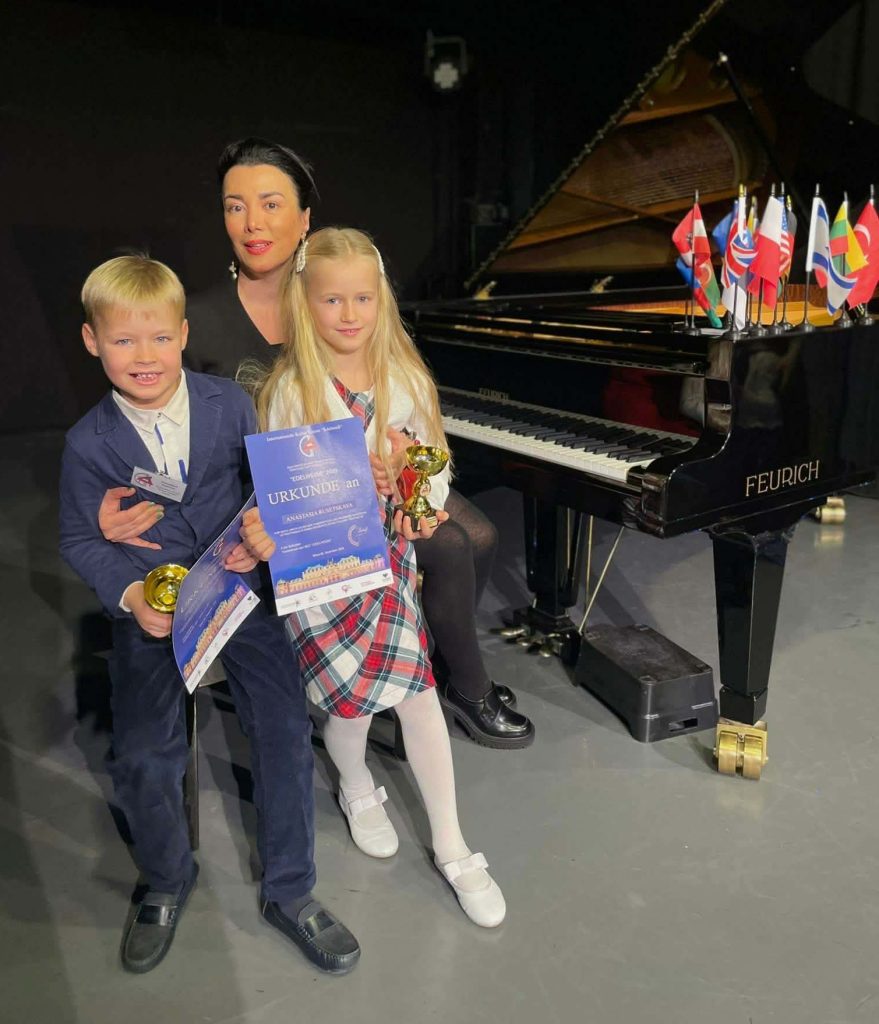
Communication with my beloved students at school encourages me to continually renew myself and remain in a state of ongoing development, applying the most innovative methods of music education.
A.T.: Dmitri Shostakovich holds a special place in your research. Why do his music and personality, in your opinion, remain relevant for contemporary listeners and future generations?
F.T.: First and foremost, this is due to the uncompromising honesty of his artistic expression. The music of Dmitri Shostakovich speaks of fear, loneliness, violence, and inner resistance, but also of human dignity and personal responsibility. These themes do not belong to a single historical era — they remain painfully recognizable today.
In his music, irony coexists with tragedy, and outward simplicity with profound inner drama. Equally important is Shostakovich’s personality itself — the figure of an artist who lived under conditions of pressure and unfreedom, yet never lost his inner ear for truth. For present and future generations, he remains a powerful example of how art can become a form of survival, resistance, and bearing witness.
A.T.: Looking to the future, how do you see the development of classical music and music education over the next 10–20 years, and what role would you personally like to play in this process?
F.T.: In the next 10–20 years, in my view, classical music will undergo a process of reformatting, with a growing emphasis on interpretation. New forms of musical presentation and hybrid modes of education will not replace live art, but rather expand it.
Music education will increasingly move away from the authoritarian transmission of knowledge toward mentorship, individualized learning paths, and the holistic development of the musician’s personality. Classical music will also become more actively engaged in social dialogue through educational, interdisciplinary, and inclusive projects.
Within this process, I see my own mission as that of an active participant in shaping a cultural environment in which music remains not merely an ornament, but a way of thinking and a form of dialogue. In this context, bringing together research, performance, and pedagogy within a shared space feels especially timely and necessary.
At the same time, it is essential to preserve the depth of the classical tradition while opening it to contemporary perception.


